
Men's Health: Prevention, Early Diagnosis, And Men's Well-Being
Movember is an international campaign held every November to raise awareness about the importance of men's health, promoting greater understanding of issues such as the prevention of urological conditions, the early diagnosis of male cancers, and the adoption of healthy lifestyles. Prostate cancer, testicular cancer, and many other conditions can develop without obvious symptoms in the early stages or may present signs that are often overlooked. For this reason, specialist consultations, regular check-ups, and a proper assessment of risk factors are essential tools for identifying potential health issues at an early stage and, when necessary, defining the most appropriate diagnostic and treatment pathways.
To mark the month dedicated to men's health awareness, UPMC Salvator Mundi International Hospital promotes the importance of prevention and early diagnosis, encouraging men to pay greater attention to their health not only during November, but throughout the entire year.
Men's preventive care at UPMC
Men's health encompasses several aspects of well-being and requires an integrated approach. In addition to urological and andrological health, it is important to monitor key cardiovascular and metabolic risk factors, which can significantly affect both quality of life and life expectancy.
Specialist consultations, laboratory tests, and diagnostic assessments help evaluate an individual's health status, identify potential risk factors, and provide personalized recommendations on the most appropriate follow-up checks over time.
As part of its men's health initiatives throughout November, UPMC Salvator Mundi International Hospital offers a selection of dedicated men's health packages, including laboratory testing, specialist consultations, and diagnostic assessments. These packages provide an opportunity to undergo targeted screenings and consult experienced healthcare professionals regarding key aspects of urological, cardiovascular, and metabolic health.
Men's Wellness
Comprehensive blood tests for an initial assessment of selected parameters associated with prostate, cardiovascular, and metabolic health, including: total PSA and free PSA; total cholesterol, HDL, and LDL; triglycerides; glycated hemoglobin (HbA1c); complete blood count (CBC); liver enzymes (transaminases); blood glucose.
To book an appointment, please contact the Clinical Laboratory:
- Tel: +39.06.58896007
- Mail: smih_laboratorio@upmc.it
Preventive Urological Care
Specialist urology consultation with ultrasound examination to assess the health of the urinary tract and prostate.
Comprehensive Cardiology Assessment
Cardiology consultation including ECG and echocardiogram for a comprehensive evaluation of cardiovascular health.
Advanced Cardiovascular Assessment
CT Angiography (CTA), recommended when further investigation of vascular abnormalities or cardiovascular risk is clinically appropriate based on specialist evaluation.
Book the package that best suits your needs by November 30, 2026. Services must be completed by December 31, 2026.
Why men’s preventive care matters
Many men tend to postpone medical consultations and health screenings even when experiencing persistent symptoms or when known risk factors are present. A timely specialist assessment can help identify potential health issues at an early stage and support the development of a personalized prevention plan.
Preventive care can help:
- Detect urological and andrological conditions at an early stage.
- Monitor prostate health.
- Address urinary or sexual health concerns that may affect quality of life.
- Evaluate metabolic and cardiovascular parameters associated with overall health.
- Identify individual risk factors.
- Receive personalized recommendations regarding regular health checks and lifestyle habits.
Prostate cancer: the most common cancer among men
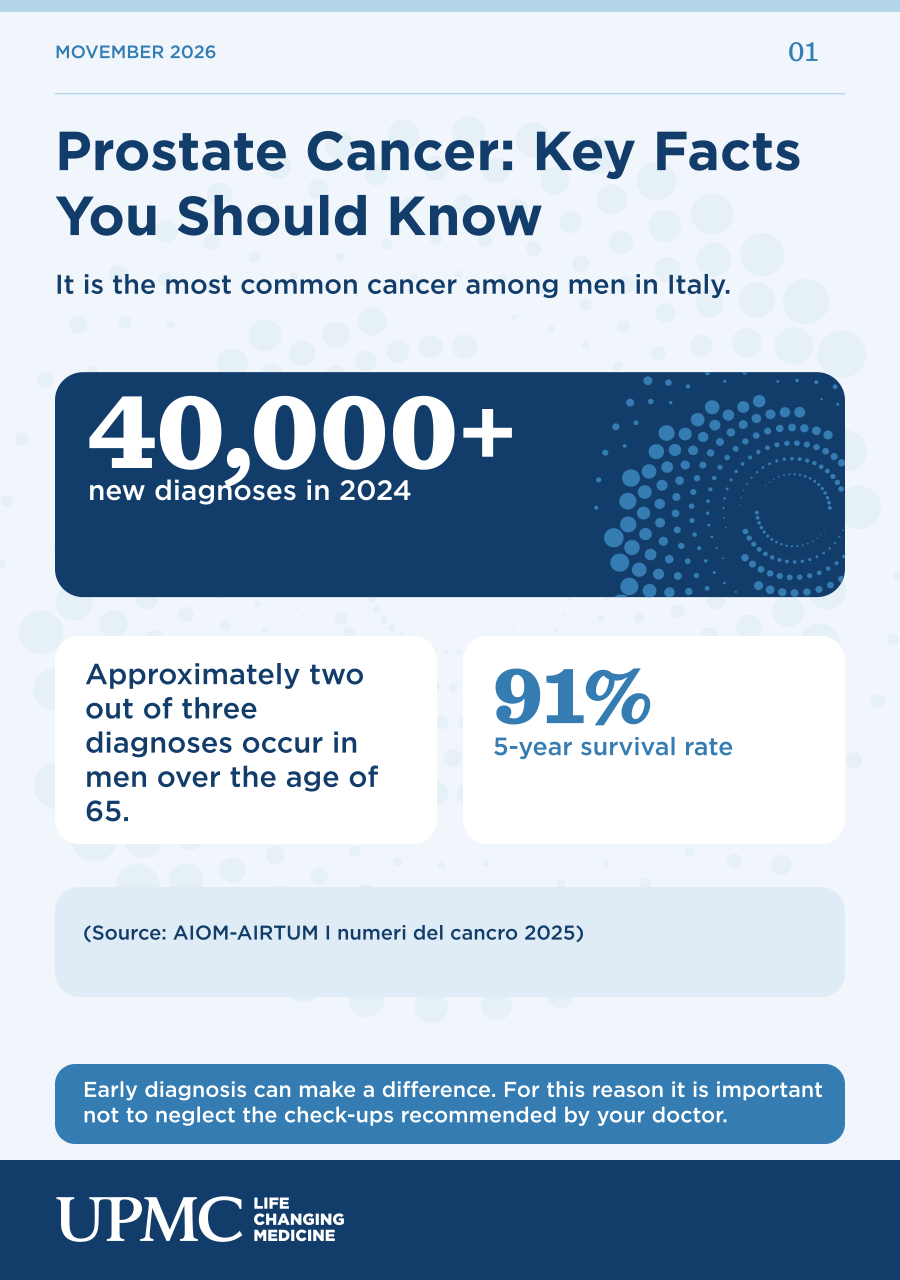
Prostate cancer is the most frequently diagnosed cancer among men in Italy. According to the AIOM-AIRTUM report, I numeri del cancro in Italia, approximately 40,000 new cases were estimated in 2024.
Risk increases with age, and approximately two out of every three diagnoses involve men over the age of 65. Thanks to advances in diagnosis and treatment, five-year survival rates now exceed 90%. For this reason, it is important to discuss with your physician or urologist whether regular screening is appropriate, particularly if personal or family risk factors are present.
Possible warning signs not to ignore
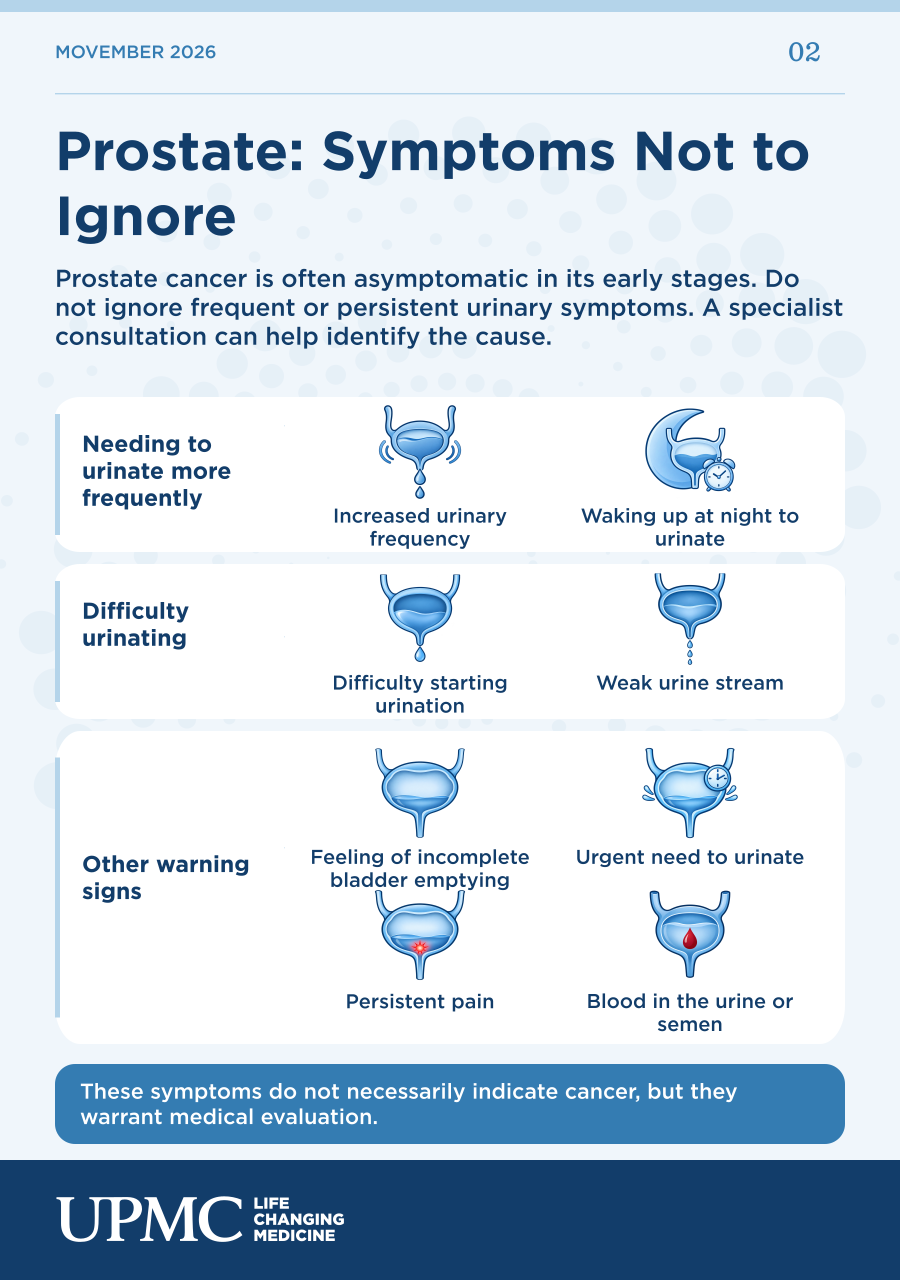
In its early stages, prostate cancer often causes no symptoms. Therefore, the absence of symptoms alone should not determine whether a specialist evaluation is necessary, particularly when personal or family risk factors exist.
When symptoms occur, urinary issues are often caused by benign conditions such as benign prostatic hyperplasia (BPH), but they should still be assessed by a urologist:
- Weak urinary stream or difficulty starting urination.
- Increased frequency of urination, including during the night.
- Urgent need to urinate.
- Persistent pain or discomfort in the pelvic or perineal area.
- Blood in the urine or semen, which should always be reported to a physician.
These symptoms do not necessarily indicate cancer; only a specialist evaluation can distinguish between a benign condition and one requiring further investigation.
Testicular cancer: recognizing the signs at a young age
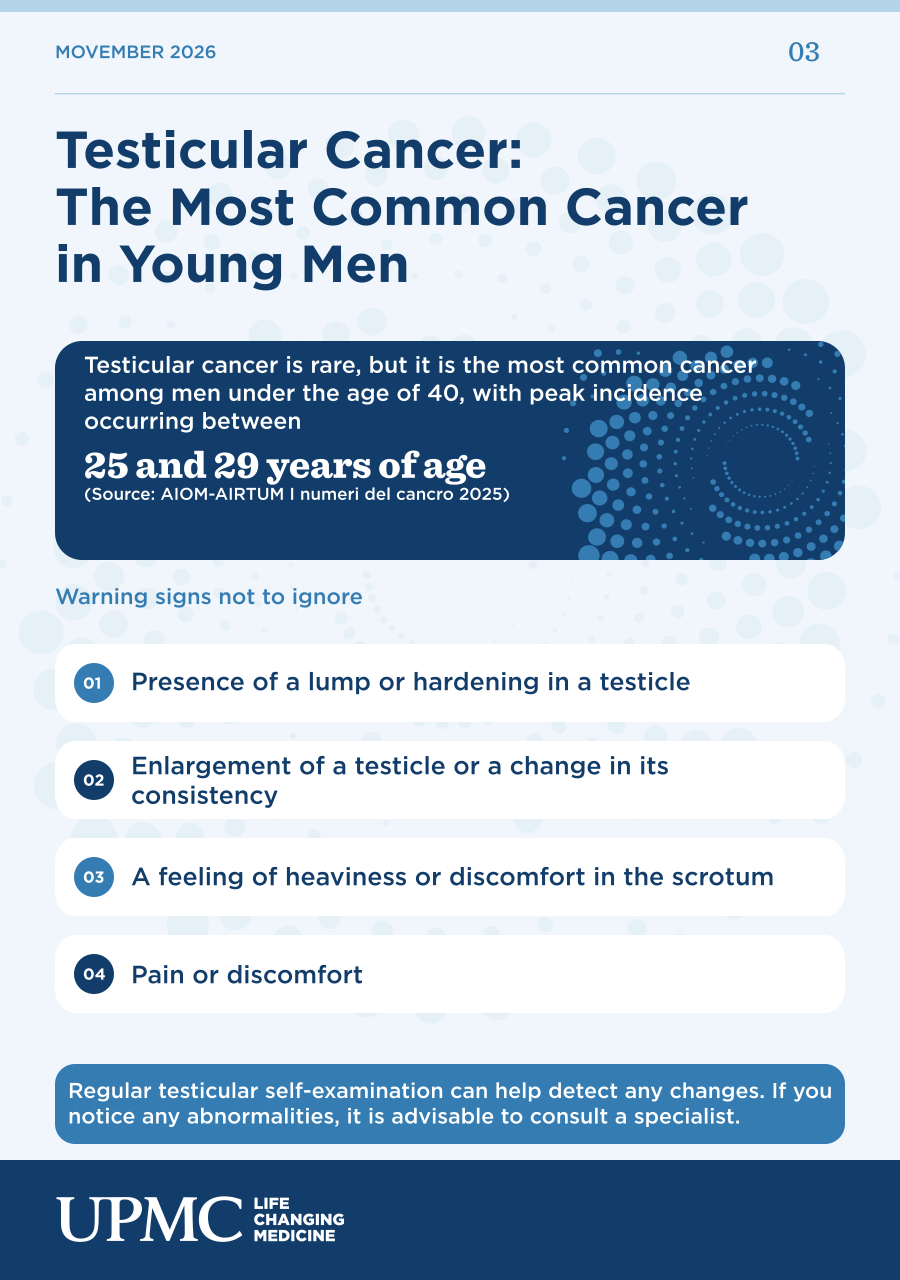
Although relatively rare in the general population, testicular cancer is the most commonly diagnosed cancer among young men, with peak incidence occurring between the ages of 25 and 29. In most cases, when diagnosed early, it is highly treatable, with a five-year survival rate exceeding 90% (Source: AIOM-AIRTUM, I numeri del cancro in Italia).
Possible signs
- A lump or hard area in one testicle, often painless.
- Enlargement or change in consistency of a testicle.
- A feeling of heaviness in the scrotum.
- Pain or discomfort, which may occur but is not the most common symptom.
Testicular self-examination: identifying changes early
Testicular self-examination can help men become familiar with the normal appearance and consistency of their testicles and recognize any changes over time. The discovery of a lump, enlargement, or other abnormalities should be reported to a specialist for further evaluation.
When to schedule a urology or andrology consultation
A urology or andrology consultation may be beneficial in the presence of urinary symptoms, testicular changes, sexual health concerns, fertility-related issues, or a family history of relevant conditions.
It is also advisable to consult a specialist if there is a family history of prostate cancer or to determine the most appropriate screening schedule based on age, individual risk factors, and personal medical history.
A specialist evaluation helps accurately assess symptoms and, when necessary, plan further investigations or regular monitoring.
Cardiovascular health: an often overlooked risk
Cardiovascular disease remains one of the leading causes of death among men. High blood pressure, elevated cholesterol, diabetes, smoking, excess weight, and physical inactivity are among the major risk factors that can increase the likelihood of developing heart and vascular disease.
Assessment of cardiovascular risk factors and, when indicated, specialist-prescribed diagnostic investigations help define personalized strategies for protecting heart and vascular health.
When a cardiovascular assessment may be helpful
- High blood pressure (hypertension).
- Elevated cholesterol levels.
- Family history of cardiovascular disease.
- Diabetes.
- Smoking.
- Overweight or obesity.
Learn more about our Urology and Cardiology services.
Learn more about men's health
Sources
- AIOM-AIRTUM, I numeri del cancro in Italia
- Istituto Superiore di Sanità (ISS) – Tumore della prostata
- Associazione Europea di Urologia (EAU) – informazioni per i pazienti su tumore della prostata e tumore del testicolo
- Ministero della Salute - Malattie cardiovascolari e fattori di rischio