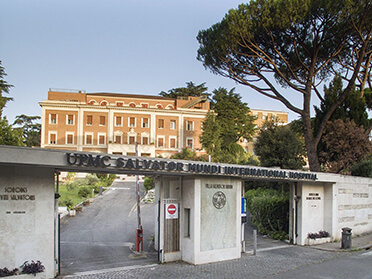
Angiology and Vascular Surgery at UPMC Salvator Mundi International Hospital
At UPMC Salvator Mundi International Hospital, we offer specialized angiology and vascular surgery services for the diagnosis, treatment, and prevention of diseases affecting veins and arteries. Our team of experts adopts a multidisciplinary and personalized approach, ensuring safe and effective treatments.
Vascular diseases can affect both the arterial and venous systems and require accurate diagnosis to preserve health and quality of life.
At our Center, we treat a wide range of vascular conditions using state-of-the-art surgical and minimally invasive techniques, including: varicose veins, lymphedema, venous insufficiency, peripheral artery disease, abdominal aortic aneurysm, and arteriovenous and cardiovascular malformations.
Vascular Conditions Treated
At UPMC Salvator Mundi International Hospital, our angiology and vascular surgery team treats a wide range of vascular conditions using a personalized approach and advanced techniques. The main conditions include:
- Abdominal aortic aneurysm (AAA): dilation of the aorta with a risk of rupture.
- Aortic dissection: a tear in the aortic wall, a severe and urgent condition.
- Arrhythmias related to vascular diseases.
- Cardiovascular and arteriovenous malformations (AVMs): abnormalities in blood flow that increase the risk of vessel rupture.
- Lymphedema (lymphatic edema): abnormal accumulation of lymph fluid due to issues in the lymphatic system.
- Peripheral artery disease (PAD): obstruction of the arteries in the lower limbs, causing pain and reduced function.
- Varicose veins: dilation and twisting of veins, mainly in the lower limbs.
- Venous insufficiency: improper functioning of the veins, often associated with varicose veins.
Our Services: Vascular Diagnostic Tests
We offer a wide range of diagnostic tests for vascular diseases, including:
- Abdominal aorta and major abdominal vessels Doppler ultrasound.
- Angiography.
- Arterial Doppler ultrasound of the upper and lower limbs.
- Carotid Doppler ultrasound.
- CT Angiography (CTA).
- Intracranial Doppler ultrasound.
- MR Angiography (MRA).
- Venous Doppler ultrasound.
Our Services: Vascular Therapies and Surgery
We perform a wide range of procedures for the treatment of vascular diseases, including:
- Minimally invasive and robotic surgery for the treatment of lymphedema, including lymphatic–venous bypass and lymph node transfer, as well as conservative techniques such as manual lymphatic drainage and compression bandaging.
- Vascular surgery for the treatment of thoracic and abdominal aortic aneurysms and peripheral artery aneurysms, correction of stenosis and occlusions of the carotid, iliac, and lower-limb arteries, procedures for removing arterial plaques (endarterectomy), and placement of vascular bypass grafts.
- Phlebological surgery for venous insufficiency and varicose veins, using techniques such as sclerotherapy, radiofrequency ablation, and vein stripping to improve venous return and relieve symptoms.
- Vascular access surgery for the creation and management of vascular access for dialysis patients, ensuring long-term safety and functionality.
- Advanced regenerative therapies for the treatment of ulcerative lesions and cardiovascular malformations.
Meet Our Specialists in Angiology and Vascular Surgery
- Dr. Cristina Belati
- Dr. Franco Conti
- Dr. Marco Franceschini
- Dr. Ciro Ferrer
- Dr. Filippo Mariotti
- Dr. Gabriele Maritati
- Dr. Filippo Napoli
- Dr. William Thomas Junior Polick
- Prof. Alessio Vona
Frequently Asked Questions About Angiology and Vascular Surgery
What is the difference between a vascular surgeon and an angiologist?
The angiologist specializes in the diagnosis, prevention, and non‑invasive treatment of diseases of the vascular system—meaning veins, arteries, and lymphatic vessels—primarily using conservative and pharmacological therapies. The main conditions treated by an angiologist include:
- Chronic venous insufficiency.
- Deep vein thrombosis (DVT).
- Lymphedema.
- Varicose veins.
The vascular surgeon, on the other hand, intervenes when surgical or minimally invasive treatment is required, for example:
- Angioplasty with stent placement to widen narrowed arteries.
- Removal of varicose veins using laser, radiofrequency, or sclerotherapy.
- Procedures for aneurysms, stenosis, and other complex circulatory conditions.
When should you schedule an angiology consultation?
An angiology consultation is recommended when symptoms appear that may indicate problems with the circulatory system, such as:
- Cold or numb hands and feet.
- Swelling, pain, or heaviness in the limbs.
- Visible varicose veins or spider veins.
- Wounds that do not heal.
It may also be prescribed for the evaluation and monitoring of an already diagnosed vascular condition.
Even in the absence of symptoms, an angiology consultation is recommended as a preventive screening for individuals who:
- Are current or former smokers.
- Have a family history of vascular diseases.
- Are over 50 years old.
- Have hypertension and/or diabetes.
What is the difference between Doppler ultrasound and Color Doppler ultrasound?
Doppler and Color Doppler ultrasounds are non‑invasive, quick, and painless diagnostic tests used to evaluate blood flow within arterial and venous vessels. The procedure is very similar for both, but they differ in how the images are displayed.
- With Doppler ultrasound, blood flow is shown in black and white, in a two‑dimensional format.
- With Color Doppler ultrasound, the images include a color map that highlights the direction and speed of blood flow, providing a more detailed visualization.
Both tests are essential for diagnosing conditions such as vascular narrowing (stenosis), occlusions, venous insufficiency, and thrombosis.
What are the symptoms of peripheral artery disease (PAD)?
Peripheral artery disease may initially be asymptomatic or present with mild discomfort. In more advanced stages, however, it can cause more severe symptoms that compromise the function of the affected limb. The most characteristic symptom is intermittent claudication: muscle pain in the legs that appears during physical activity (walking or exertion) and improves with rest. The intensity can range from mild discomfort to limiting pain.
Other possible signs and symptoms include:
- Changes in the color and temperature of the limb.
- Erectile dysfunction in men.
- Numbness or weakness in the affected limb.
- Thinner, shinier skin, with slowed hair and nail growth.
- Ulcers or skin lesions in advanced stages.
How is lower limb lymphedema diagnosed and treated?
The diagnosis of lower‑limb lymphedema is primarily clinical and is based on medical history, physical examination, and limb‑volume measurement. It can be supplemented with imaging tests such as lymphoscintigraphy, Magnetic Resonance Imaging (MRI), or ultrasound.
Treatment options for lymphedema vary depending on the severity of the condition. The conservative approach, known as decongestive therapy, includes a combination of:
- Compression bandaging.
- Specific physical exercises.
- Skin care and hygiene to prevent infections and other complications.
- Manual or mechanical lymphatic drainage.
- Use of compression stockings.
When these measures are not sufficient, microsurgery may be considered – for example, lymphatic‑venous bypass, which helps resolve lymphatic congestion and restore lymphatic circulation in the affected limb.
Can arrhythmias be related to vascular disease?
Yes, cardiac arrhythmias can be closely linked to vascular diseases. Certain cardiovascular conditions—such as myocardial infarction, arterial hypertension, and atherosclerosis—can reduce the oxygen supply to the heart muscle or alter the structure of the heart. These factors may promote changes in the electrical pathways that regulate the heartbeat.
As a result, vascular diseases can directly contribute to the development of several types of arrhythmias, including:
- Atrial fibrillation.
- Ventricular tachycardias.
- Other rhythm disorders that make the heartbeat irregular or less effective.
Are varicose veins and venous insufficiency the same thing?
No, varicose veins and venous insufficiency are not the same, although they are closely related.
- Varicose veins are dilated, twisted veins that are especially visible on the legs. They often develop due to malfunctioning venous valves, which impair proper blood flow back to the heart and cause blood to pool in the vessels, making them more prominent under the skin.
- Venous insufficiency is a condition in which the veins lose their ability to transport blood efficiently, leading to blood stasis—especially in the lower limbs. Common symptoms include leg swelling and heaviness, pain or itching, and, in more advanced stages, venous ulcers.
In summary, varicose veins can be a sign of venous insufficiency, but venous insufficiency can also occur without the presence of varicose veins.
What does “aortic aneurysm” mean?
The term aneurysm comes from ancient Greek and means “dilation”. In medicine, an aortic aneurysm refers to a permanent and abnormal enlargement of a section of the aorta, the largest blood vessel in the body.
This dilation weakens the artery walls, making them thinner and at higher risk of rupture. The most common site is the abdominal aorta, which accounts for about 80% of cases. Less frequently, aneurysms can develop in the thoracic aorta.
An aortic aneurysm is a potentially very serious condition because a rupture can cause severe internal bleeding, which is almost always fatal.




We offer medical services and services on a private basis or in agreement with the main insurance companies. Some of our services are also affiliated with the National Health System.
For more information on active agreements, visit: